
Welcome to the first series of exciting dialogues!
Together, we can create a world where all voices are heard, valued and given the means to flourish.
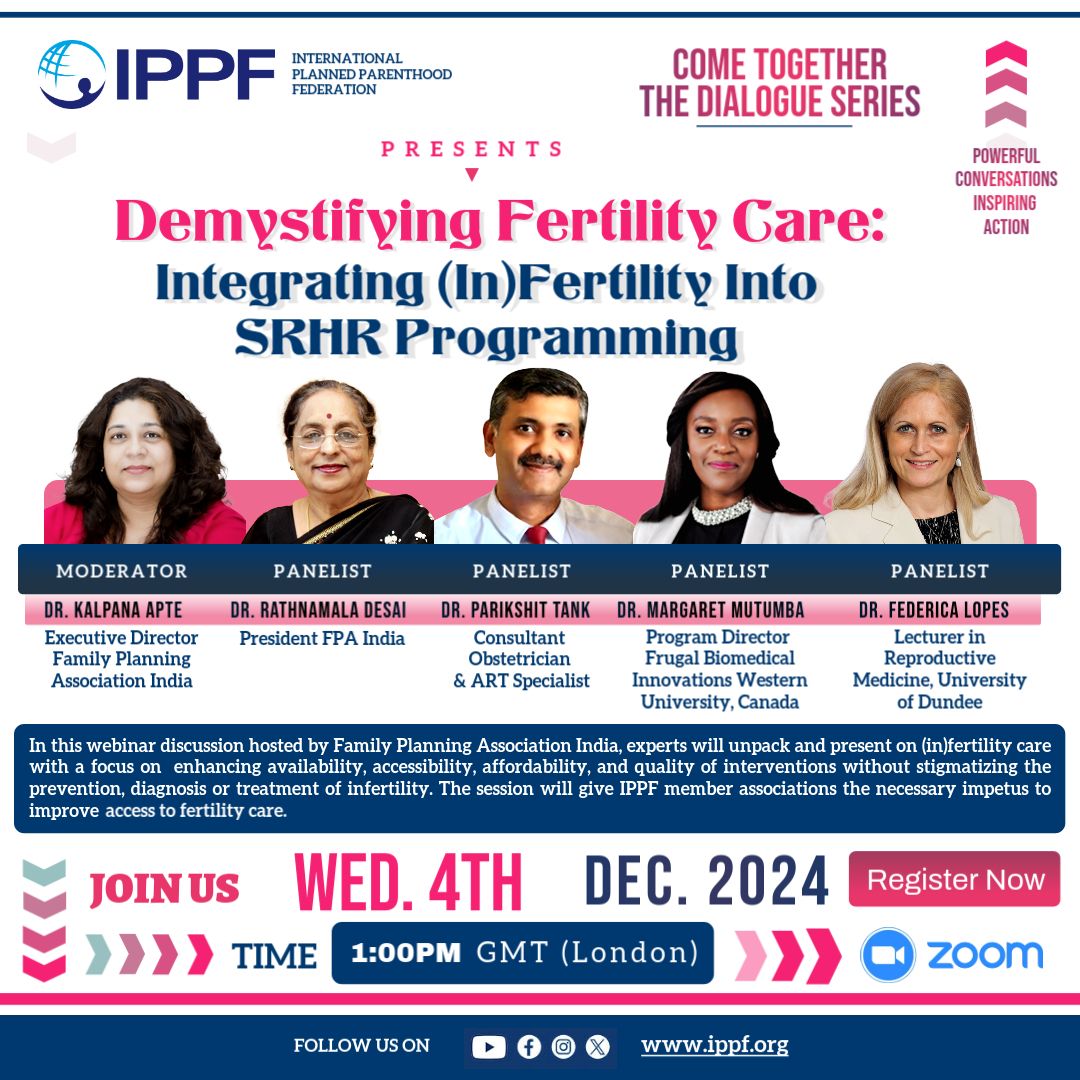
Demystifying fertility care: integrating (in)fertility into SRHR programmes
4 December 2023
In this webinar organised by the Indian Family Planning Association, experts unpacked and presented (in)fertility care with a focus on improving the availability, accessibility, affordability and quality of interventions without stigmatising infertility prevention, diagnosis or treatment. The session gives IPPF member associations the impetus they need to improve access to fertility care.
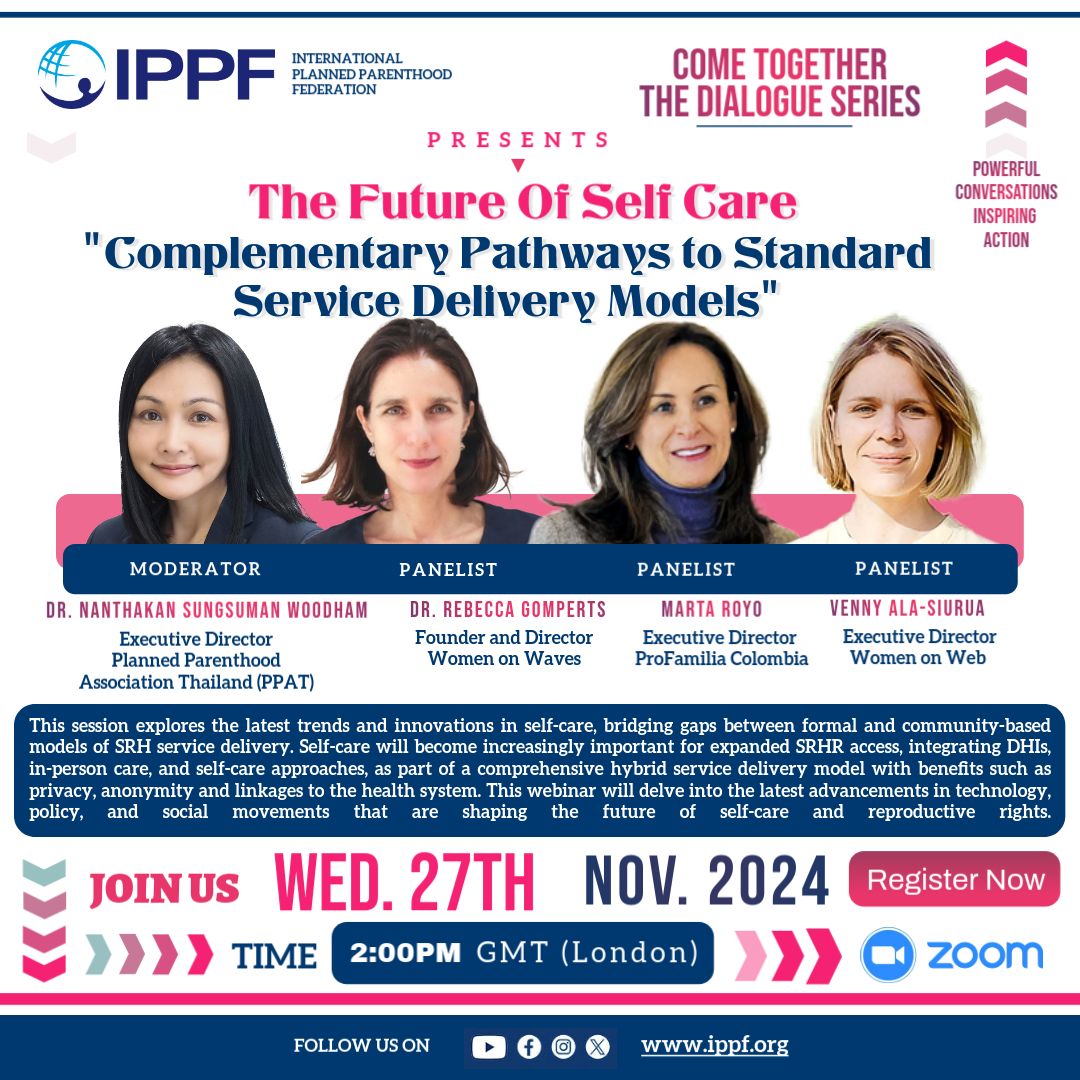
The future of self-care: Complementary approaches to standard service delivery models
27 November 2024
This webinar explores the latest trends and innovations in self-care, bridging the gaps between formal and community models of sexual and reproductive health service provision. This webinar will look at the latest developments in technology, policy and social movements that are shaping the future of self-care and reproductive rights.
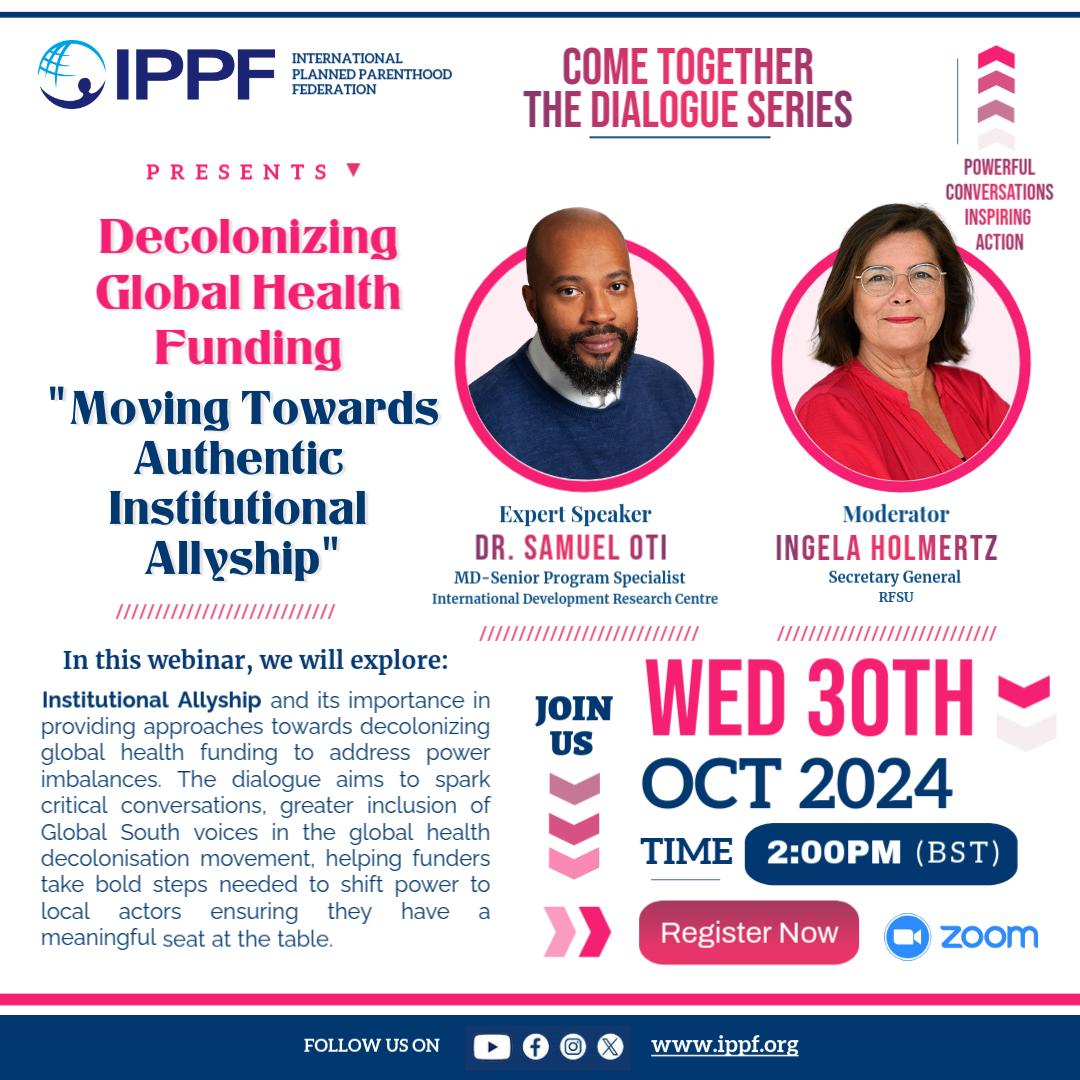
Decolonising global health financing: Towards a genuine institutional ally
30 October 2024
This session critically examines the persistent colonial influences embedded in global health financing structures that often perpetuate power imbalances and impede equitable progress. By examining funding allocation mechanisms, decision-making processes and the role of donor organisations, we seek to discover how these factors affect the autonomy and effectiveness of health initiatives in low- and middle-income countries.
Decolonising global health Where are the voices from the South?
Towards a genuine institutional ally for global health donors
Power shift : Decolonising knowledge and programmes for an equitable future
25 September 2024
This session invites participants to rethink and reshape research methodologies using decolonial frameworks that prioritise the experiences, expertise and needs of these communities. Beyond the critique of harmful colonial practices that continue to dominate global research, the session will highlight the transformative potential of decolonial approaches. These approaches actively challenge power imbalances, enabling researchers to build equitable and reciprocal community partnerships.


From clicks to progress : Young people’s digital journeys as part of the ESR
12 August 2024
This session looks at the innovative intersection of digital technology and comprehensive sexuality education (CSE). As we navigate the rapidly expanding digital realm, it is becoming increasingly important to harness cyber tools to disseminate information in order to foster meaningful engagement and advocacy. We will examine the challenges of digital engagement – such as misinformation and the digital divide – and discuss how to overcome them to ensure effective communication and education.
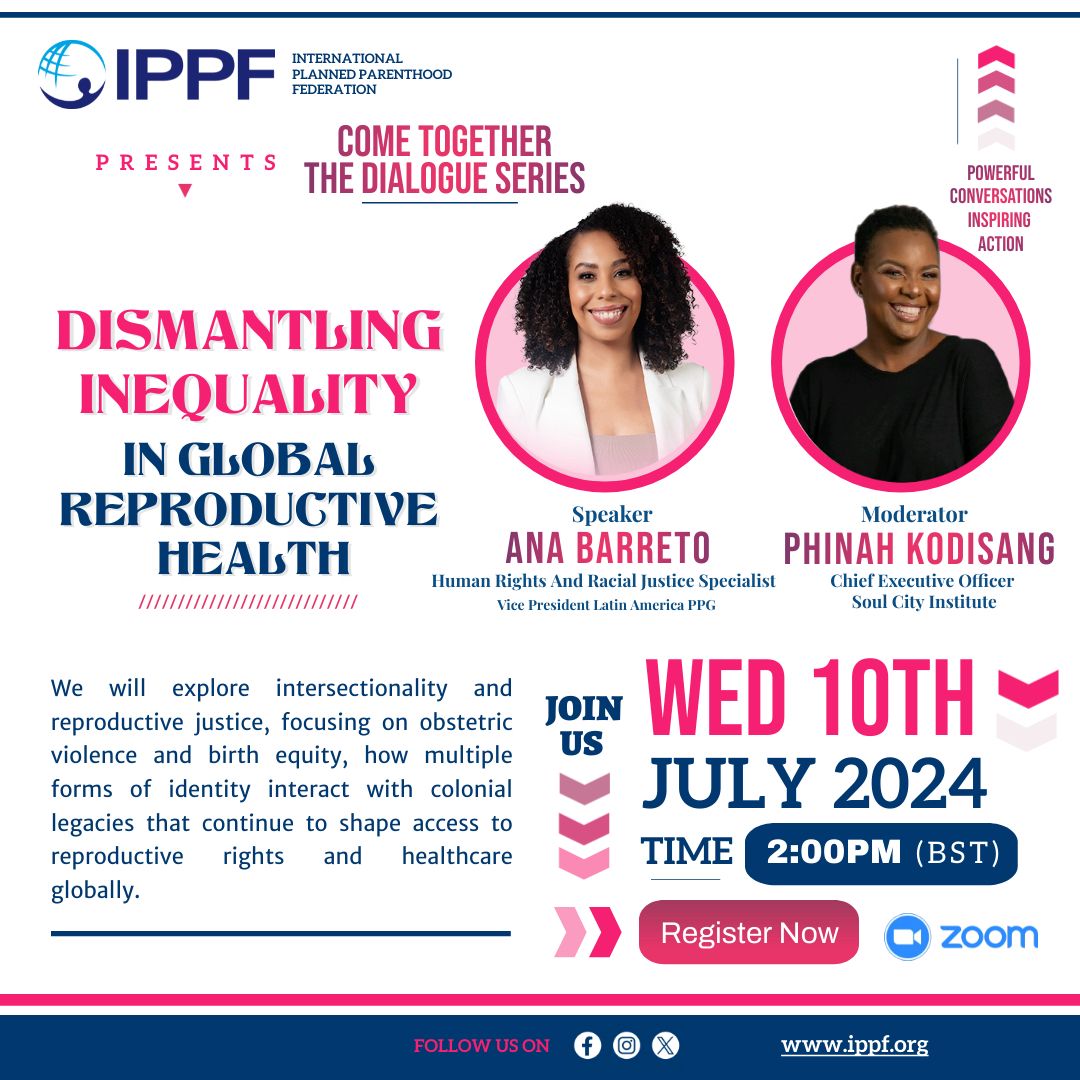
Dismantling inequalities in reproductive health worldwide
10 July 2024
This session examines how multiple forms of identity, including race, gender, socio-economic status, disability and sexual orientation, intersect with enduring legacies of colonialism that continue to shape access to reproductive rights and healthcare around the world. This dialogue aims to deconstruct colonial influences on reproductive health systems and policies across diverse historical and socio-political landscapes.
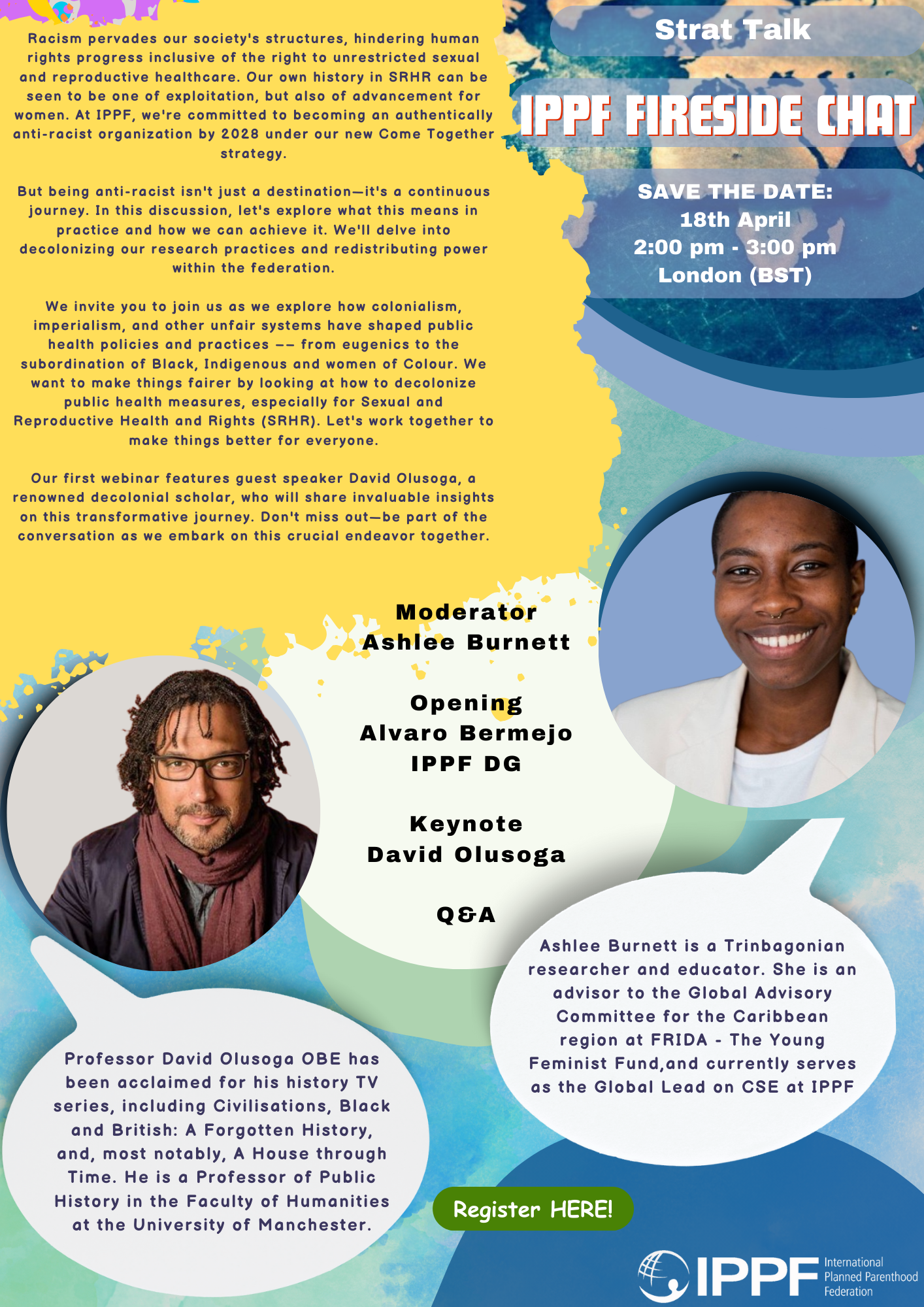
Conversation with David Olusoga – A brief history of race and racism from an SRHR perspective
18 April 2024
This discussion will explore how colonialism, imperialism and other unjust systems have shaped public health policy and practice. From eugenics to the subordination of black women, indigenous women and women of colour. We want to make things fairer by looking at how to decolonise public health measures, particularly in the area of sexual and reproductive health. Guest speaker David Olusoga, a renowned expert on decolonisation, provides valuable insights into this transformative journey.