About the IPPF Center of Excellence on Sexual Orientation, Gender Identity and Expression and Sex Characteristics (SOGIESC)
IPPF is cognizant of the systemic barriers or failures that stand in the way of the right to health including SRHR for everyone. Often entire communities of people carry the weight of oppression and discrimination. Therefore, IPPF commits to prioritize safe and quality care for people who are excluded and marginalized – in the “Come Together, IPPF Strategy 2028”, IPPF has committed to involve and provide care for LGBTQ+ communities:
“By 2028, our services will be open, accessible, and respectful of sexual diversity, with more member associations providing services to LGBTQ+ communities”
In line with IPPF’s commitments to the LGBTQ+ community, the IPPF Centre of Excellence (CoE) on Sexual Orientation, Gender Identity and Expression and Sex Characteristics (SOGIESC) seeks to facilitate capacity strengthening, knowledge sharing and resource availability among IPPF Member Associations (MAs) and Collaborative Partners (CPs) with the aim to strengthen SOGIESC-inclusive SRHR programming within IPPF.
The CoE aspires to:
- Support MAs/CPs to become strong allies in their own context
- Support collaboration and knowledge sharing about SOGIESC and SRHR among MAs/CPs
- Provide opportunities for MAs to explore and advance SOGIESC programming in their own contexts
- Support MAs in their ability to advocate on SOGIESC related issues
- Increase visibility and awareness of SOGIESC-related SRHR needs within IPPF
- Strengthen external partnerships and coalition building between IPPF MAs/CPs and the LGBTQ+ community
Strategic interventions
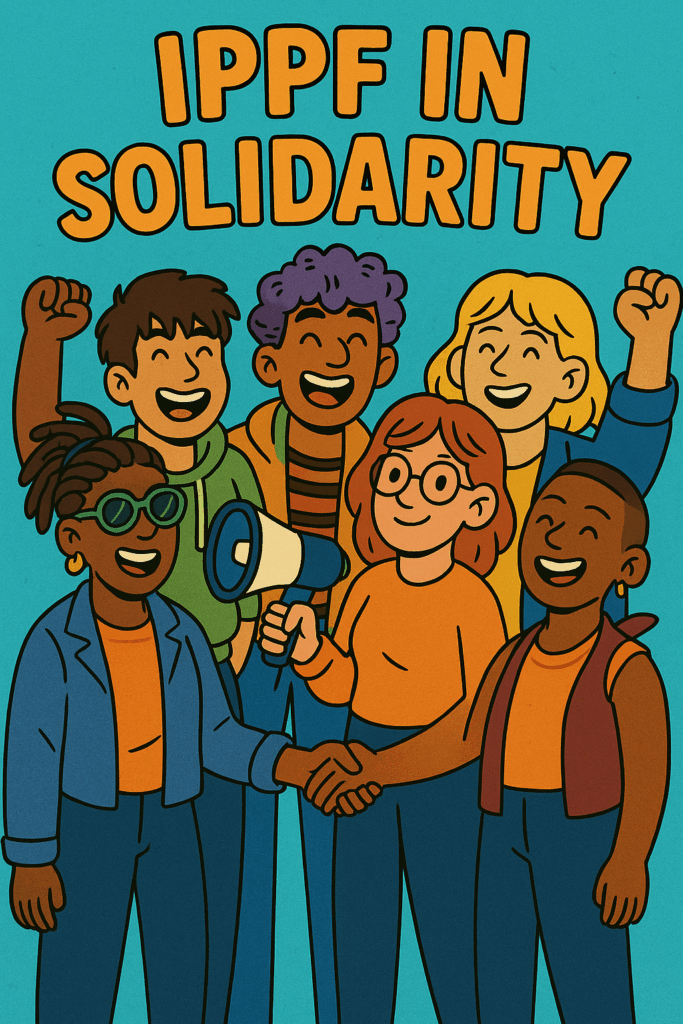
The CoE works for a movement in solidarity, with knowledge, capacity and resources to realize each SOGIESC-inclusive SRHR programmatic aspirations through strategic interventions including trainings, capacity sharing among MAs/CPs and grant opportunities.
The CoE offers platforms for MAs and CPs to strengthen their capacity on SOGIESC and SRHR through trainings, knowledge sharing, peer learning, and experience exchange across IPPF regions. Webinars serve as a primary mode of engagement for the CoE.
The CoE will also offer grant opportunities for selected MAs and CPs to further explore or advance their work on SOGIECS and SRHR.
Benefits for MAs/CPs involved:
- Capacity strengthening on SOGIESC and SRHR
- Sharing knowledge, expertise and learning across MAs/CPs in IPPF
- Grant opportunities
- Platform for networking and collaboration with other MAs/CPs and LGBTQ+ organisations
The CoE emphasizes that all opportunities for capacity, knowledge sharing, grants are open for all MAs/CPs regardless of the existing experience or expertise with SOGIESC and SRHR.
The operational structure of the CoE
The CoE is co-hosted by Reproductive Health Uganda (RHU) and Danish Family Planning Association (DFPA). The CoE closely collaborates with the IPPF Secretariat through an established Steering Committee.
Opportunities
Opportunities will be launched here when available.
Learning resources
Knowledge tools
Coming
Vocabulary
| Term | Definition |
| Agender | A person who identifies as having no gender or as gender-neutral. |
| Ally | A person who is not LGBTIQ+ but supports and advocates for the rights and dignity of LGBTIQ+ individuals. |
| Androgynous | Blending or avoiding traditional gender distinctions in gender expression. |
| Assigned Sex at Birth | The label (male/female/intersex) given to a person at birth based on physical anatomy. |
| Asexual | A person who experiences little or no sexual attraction to others. Some may still experience romantic attraction. |
| Biphobia | Discrimination or negative attitudes specifically directed at bisexual individuals. |
| Bisexual | A person who is attracted to more than one gender. |
| Cisgender | A person whose gender identity aligns with the sex they were assigned at birth. |
| Conversion Therapy | Pseudoscientific practices that attempt to change an individual’s sexual orientation or gender identity. Considered harmful and widely condemned. |
| Deadnaming | Using the birth name of a transgender person without their consent, especially after they’ve changed it. Often considered disrespectful. |
| Erasure | The exclusion or minimization of certain identities or experiences, such as bisexual or intersex erasure. |
| Gay | A person who is emotionally, romantically, or sexually attracted to people of the same gender. Often used to refer to men but can also be used generally. |
| Gender | A social and cultural construct related to the roles, behaviors, and attributes considered appropriate for men, women, and other gender identities. |
| Gender Affirming Care | Medical, psychological, and social support aimed at helping people align their gender identity with their physical appearance and documentation. |
| Gender Expression | The outward presentation of one’s gender, through behavior, clothing, voice, and appearance. |
| Gender Identity | A person’s deeply held sense of their own gender, which may or may not correspond with the sex assigned at birth. |
| Genderfluid | A person whose gender identity varies over time or depending on the situation. |
| Genderqueer | A term for people who reject traditional gender distinctions, often overlapping with non-binary. |
| Heteronormativity | The assumption that heterosexuality is the default or norm, often marginalizing other orientations and gender identities. |
| Heterosexual | A person attracted to people of the opposite gender. |
| Homophobia | Prejudice or discrimination against people who are or are perceived to be gay or lesbian. |
| Inclusive Language | Language that avoids bias, slang, or expressions that discriminate against marginalized groups. |
| Intersex | A person born with physical sex characteristics that don’t fit typical definitions of male or female bodies. |
| Intersexphobia | Prejudice or discrimination against intersex individuals, including the denial of their bodily autonomy. |
| Intersectionality | A framework for understanding how aspects of a person’s identity (e.g., race, gender, class, ability, sexual orientation) intersect and compound discrimination. |
| Legal Gender Recognition | The legal process of changing one’s gender marker on official documents to reflect their gender identity. |
| Lesbian | A woman who is emotionally, romantically, or sexually attracted to other women. |
| LGBTIQ+ | Acronym for Lesbian, Gay, Bisexual, Transgender, Intersex, Queer, with the plus (+) representing other diverse sexualities and gender identities. |
| Misgendering | Referring to someone using incorrect pronouns or gendered language that does not reflect their gender identity. |
| MSM / WSW | MSM (men who have sex with men) and WSW (women who have sex with women) are public health terms used to describe sexual behavior, regardless of orientation or identity. These terms focus on behavior rather than self-identification. |
| Non-binary | A person who does not identify exclusively as male or female. They may identify as both, neither, or on a spectrum. |
| Outing | The act of revealing someone’s sexual orientation or gender identity without their consent. Considered a violation of privacy and trust. |
| Pansexual | A person who is attracted to individuals regardless of their gender identity or sex characteristics. |
| Passing | When a person is perceived by others as the gender they identify with. This may feel affirming but can also come with pressure or assumptions. |
| Pronouns | Words used to refer to someone in place of their name (e.g., he/him, she/her, they/them, ze/zir). Important for affirming gender identity. |
| Queer | A reclaimed umbrella term for non-heterosexual and/or non-cisgender identities. While empowering for some, it may still be considered offensive by others due to its historical use as a slur. |
| Questioning | A person exploring or unsure about their sexual orientation or gender identity. |
| Safe Space | An environment where individuals can express themselves freely and without fear of discrimination or harassment. |
| Sex Characteristics | Physical features including genitals, hormones, chromosomes, and secondary sex traits. |
| Sexual Orientation | A person’s enduring emotional, romantic, or sexual attraction to others. |
| Sexuality | The way people experience and express themselves sexually. This involves biological, psychological, physical, erotic, emotional, social, or spiritual feelings and behaviors. |
| SOGIESC | An acronym for Sexual Orientation, Gender Identity and Expression, and Sex Characteristics. This term is widely used in international human rights frameworks to describe diversity in these areas. |
| Transgender | A person whose gender identity differs from the sex assigned to them at birth. |
| Transphobia | Prejudice, fear, or hatred directed at transgender people or those perceived to be trans. |
CoE presentations
Recordings of the IPPF CoE on SOGIESC Virtual Launch: click here.
Recording of SOGIESC CoE Webinar 1: “Understanding SOGIESC: Concepts and Foundations”. Click here
Media
Coming